Commercial vs Residential Concrete Grinding: Key Differences
Surface Master Australia | | 8 min read
Commercial concrete grinding is a fundamentally different operation to residential work — different machines, power supply, dust requirements, and logistics. Here's what sets them apart.
 Illustrative image
Scale, Equipment, and Logistics: The Commercial Difference
Concrete grinding is not a single activity — it exists on a spectrum from a 20sqm residential laundry to a 5,000sqm industrial warehouse. At each end of the spectrum, the equipment, process, logistics, and crew requirements are completely different. Understanding these differences helps facility managers, project managers, and builders select the right contractor and set realistic expectations.
Machine Size and Configuration
 Illustrative image
The most fundamental difference between residential and commercial concrete grinding is machine size.
Residential grinding typically uses single-phase (240V) planetary grinders in the 650-900mm head width range. These machines operate from a standard domestic power outlet, weigh 100-250kg, and are transportable in a van or small truck. They can navigate through standard doorways, work in tight garage spaces, and are appropriate for areas up to approximately 100-200sqm.
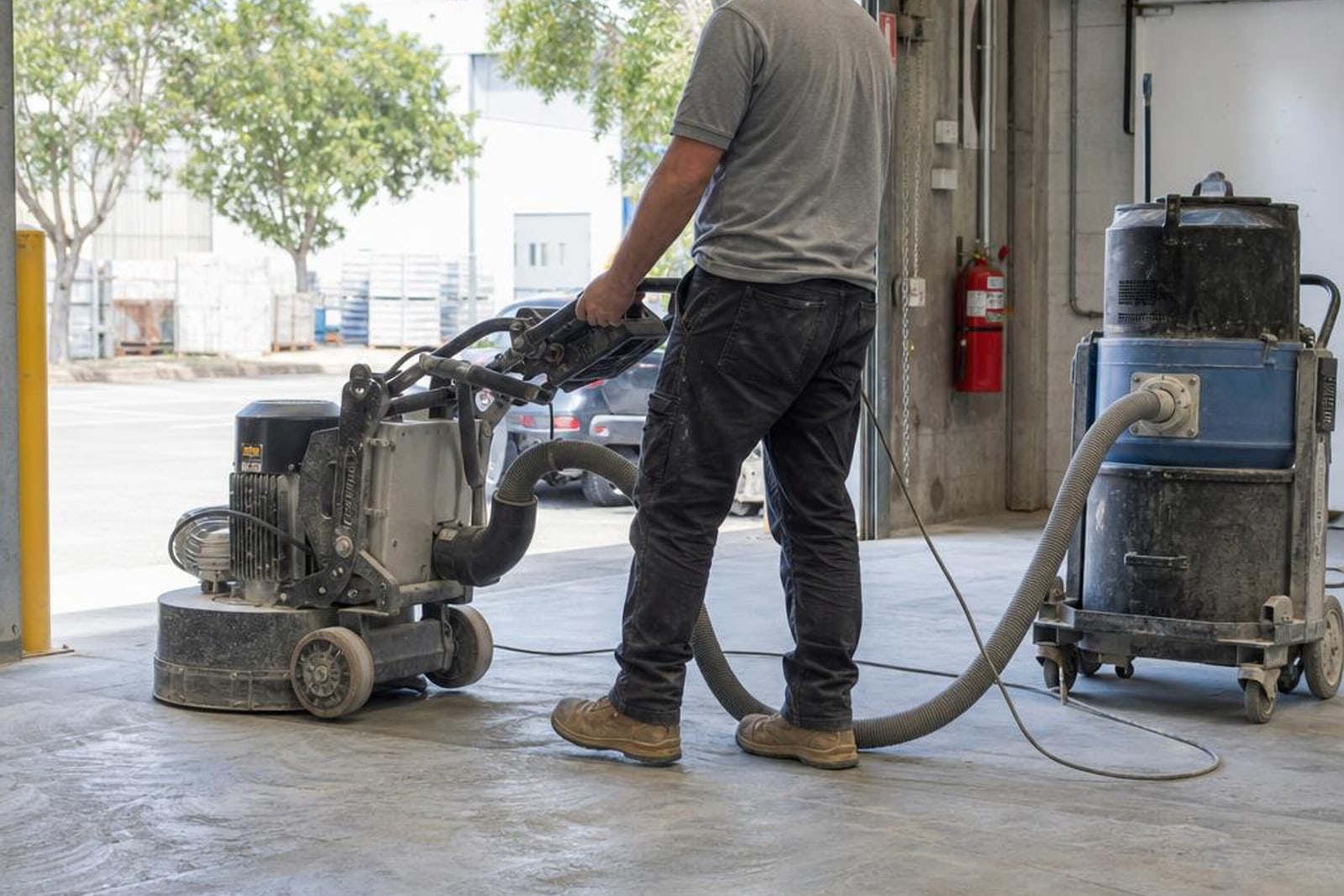
Commercial grinding uses three-phase (415V) planetary grinders in the 450-900mm head width range — but often multiple machines working simultaneously. Three-phase power is available in most commercial and industrial facilities. These machines are heavier (up to 500kg), deliver significantly more downforce, and generate greater grinding head speed. For a 1,000sqm warehouse:
- A single residential-spec grinder might take 15-20 working days to complete preparation
- A commercial crew with two three-phase planetary grinders can complete the same area in 3-5 days
For large commercial projects (2,000sqm+), ride-on grinding machines are sometimes deployed. These diesel or electric-powered units are essentially commercial floor care machines of the size used in airport terminals or shopping centres, and can achieve extraordinary production rates of 1,000-2,500sqm per day.
Head Configurations and Diamond Tooling
Diamond tooling selection differs significantly between commercial and residential applications:
- Residential concrete is typically relatively hard (25-45 MPa), well-cured, and with limited contamination. Standard medium-bond diamond segments work well in most cases.
- Commercial and industrial concrete varies enormously — from soft, poorly-cured slabs to extremely hard, densified floors. Industrial floors may have heavy contamination (oil, chemicals, adhesive residue), previous coating systems of unknown chemistry, or reinforcing steel close to the surface. This requires a larger range of diamond tooling options and experienced operators who can read the concrete and change tooling to maintain production rates.
Commercial jobs also frequently require specialised tooling for specific tasks: PCD (polycrystalline diamond) tooling for rapid removal of thick adhesive or coating, scarifying drums for heavy paint or levelling compound removal, and shot blasting units for aggressive profile creation.
3-Phase vs Single-Phase Power Requirements
 Illustrative image
Single-phase (240V) power is available in almost every residential property and many small commercial premises. Three-phase (415V) power is required for larger commercial grinding machines and is typically available in factories, warehouses, and commercial buildings.
When three-phase power is not available at a commercial site, contractors must either use single-phase equipment (accepting lower production rates) or arrange for a three-phase generator. Generator hire for commercial grinding adds $200-$500/day to project costs but is often necessary for efficient large-scale work.
Always confirm power availability during site inspection — this is a critical logistics factor that affects both timeline and cost.
Production Rates in Commercial vs Residential
Production rates are one of the most frequently misunderstood aspects of commercial concrete grinding. Factors that affect production rate:
- Concrete hardness: Hard concrete grinds slower. Aggregate type, cement content, and curing method all affect hardness.
- Task: Light surface grinding (CSP 2-3) runs 300-600sqm per shift. Coating removal (old epoxy, glue, paint) reduces rates to 100-250sqm per shift. Heavy scarification for industrial systems can be as low as 50-100sqm per shift.
- Area configuration: Open warehouse floors with minimal obstacles: maximum production rates. Areas with columns, racking, or complex layout: rates may drop 30-40%.
- Crew size: A two-machine crew with dedicated edge grinder operator runs 1.5-2x the production of a single-machine setup.
Dust Management in Commercial Environments
Dust management is regulated under WHS requirements in NSW commercial environments. The obligations for commercial sites are more stringent than residential:
- HEPA-rated vacuum extraction must be connected directly to each grinding machine
- Air quality monitoring may be required in enclosed commercial spaces
- Neighbouring businesses (in multi-tenancy industrial estates) must be notified if dust extraction is interrupted
- Workers must wear appropriate respiratory protection (P2 minimum, P3 recommended) and eye protection
- WHS safety data sheets (SDS) for all dusts generated must be on site
Commercial clients should require a written WHS Management Plan from their concrete grinding contractor that addresses all of the above.
Staging Occupied Commercial Facilities
Occupied commercial grinding differs from residential work in several key respects:
- Work scheduling must accommodate production operations — typically nights, weekends, or staged sections during business hours
- Racking, equipment, and stock relocation must be coordinated and accounted for in the project timeline
- Access control, site inductions, and contractor management systems may apply
- Re-entry times for coated areas must be integrated with production scheduling
- Emergency shutdown protocols must be agreed in advance
A commercial concrete grinding and coating contractor must be able to demonstrate experience in occupied facilities management — including staging plan development, WHS compliance, and coordination with facility management teams.
FAQs
What size grinding machines are used for commercial warehouse floors?
Commercial warehouse floors are typically ground using three-phase (415V) planetary grinders — 450-900mm head width, weighing up to 500kg. For very large areas (2,000sqm+), ride-on grinding machines may be used for maximum production rates. Residential jobs use smaller single-phase machines appropriate for domestic power supply.
How long does commercial concrete grinding take?
Production rates depend on task, concrete hardness, and crew configuration. Basic surface grinding for coating preparation: 300-600sqm per shift with a two-machine commercial crew. Coating removal adds complexity — 100-250sqm per shift. A 1,000sqm warehouse requiring grinding and coating removal would typically require 3-5 working days with appropriate commercial equipment.
Can commercial concrete grinding be done while a warehouse is operating?
Yes, with appropriate staging and dust management. Large commercial grinding jobs are regularly staged in sections — working one zone while other areas remain operational. Section sizes of 200-400sqm work well for most warehouse operations. Work can be scheduled for nights or weekends to minimise operational disruption. A detailed staging plan should be developed and agreed before work begins.
What dust management is required for commercial concrete grinding in NSW?
Under NSW WHS Regulations, commercial concrete grinding requires HEPA-rated vacuum extraction directly connected to grinding machines, worker respiratory protection (P2/P3), eye protection, and onsite safety data sheets for all dusts. In enclosed commercial spaces, air quality monitoring may be required. Request a written WHS Management Plan from any commercial grinding contractor.
What production rates should I budget for commercial concrete grinding?
Budget production rates: Basic surface grinding (CSP 2-3): 300-600sqm per shift. Coating or adhesive removal: 100-250sqm per shift. Shot blasting for aggressive profile: 200-400sqm per shift. Ride-on commercial machines: 1,000-2,500sqm per day on open floor areas. Always confirm with your contractor based on site inspection and concrete assessment.


